 |
UDocumentation UE5.7 10.02.2026 (Source)
API documentation for Unreal Engine 5.7
|
|
UDocumentation UE5.7 10.02.2026 (Source)
API documentation for Unreal Engine 5.7
|
#include <MovieSceneAnimTypeID.h>
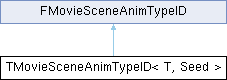
 Inheritance diagram for TMovieSceneAnimTypeID< T, Seed >:
Additional Inherited Members | |
| Static Public Member Functions inherited from FMovieSceneAnimTypeID | |
| static MOVIESCENE_API FMovieSceneAnimTypeID | Unique () |
| static MOVIESCENE_API FMovieSceneAnimTypeID | Combine (FMovieSceneAnimTypeID A, FMovieSceneAnimTypeID B) |
| Protected Member Functions inherited from FMovieSceneAnimTypeID | |
| FMovieSceneAnimTypeID (uint64 *StaticPtr, uint32 Seed=0) | |
| FMovieSceneAnimTypeID () | |
| Static Protected Member Functions inherited from FMovieSceneAnimTypeID | |
| static MOVIESCENE_API uint64 | Initialize (uint64 *StaticPtr, uint32 Seed) |
| static MOVIESCENE_API uint64 | GenerateHash (void *StaticPtr, uint32 Seed) |
| Protected Attributes inherited from FMovieSceneAnimTypeID | |
| uint64 | ID |
Templated class that initializes a unique ID for the templated type (normally an execution token) Care should be taken here not to expose the type in any way across a DLL boundary, as this will break the uniqueness of the identifier. If it's necessary to expose the ID across DLL boundaries, use the following pattern:
MyAnimationToken.h:

struct FMyAnimationToken : IMovieSceneExecutionToken
{
    MYMODULE_API static FMovieSceneAnimTypeID GetTypeID();
};

MyAnimationToken.cpp:

FMovieSceneAnimTypeID FMyAnimationToken::GetTypeID()
{
    return TMovieSceneAnimTypeID<FMyAnimationToken>();
}
 1.9.8
1.9.8